
Ceiling seepage
Stains, peeling paint or dripping may originate from upstairs waterproofing, drainage or supply pipes, external walls or roofs. Tests are needed to distinguish the source.
Man Kee Engineering Company
Infrared leak detection · Source investigation · Reports · Expert witnesses
Man Kee Engineering Companyis a Hong Kong leak investigation company helping owners, property managers, developers and law firms identify sources and clarify responsibility. Our team includes Authorised Persons and registered surveyors. Engineers, surveyors and Authorised Persons analyse findings using multiple corroborating tests. We are appointed by several developers for leakage investigations.
We understand the disruption leaks cause. Delays often increase damage and repair costs. Establishing the source first and making targeted repairs is usually more efficient.
Services
We use instruments and tests to locate seepage, assess its extent and trace its causes, addressing a range of leaks and flooding problems:
Stains, peeling paint or dripping may originate from upstairs waterproofing, drainage or supply pipes, external walls or roofs. Tests are needed to distinguish the source.
Cracks, damaged external finishes and poorly sealed windows allow rain into internal walls, often during the rainy season or after typhoons.
Ageing or poorly installed bathroom and kitchen waterproofing can allow water into the flat below or adjacent wall bases.
Ageing waterproofing or blocked drainage and ponding on roofs or podiums can dampen top-floor ceilings.
Concealed supply pipe fractures or loose joints in walls and floors can cause continuous leakage and require prompt location and repair.
Blocked or damaged drains can cause sewage to back up or leak, damaging finishes and creating hygiene problems.
Seepage investigation
The following signs may indicate leakage and warrant early investigation:
Buyers of existing properties and owners receiving new flats can also check for seepage duringNew and existing property inspectionsand arrange source investigation if a problem is found.
Investigation process
Our approach generally follows three steps:
Investigation methods
Every case differs, and one method alone may not establish the source. We select and corroborate appropriate methods, including:
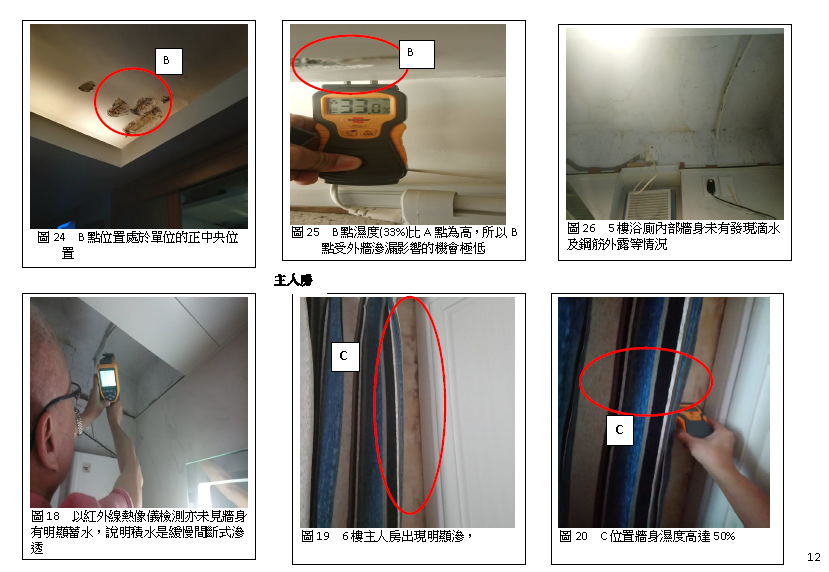
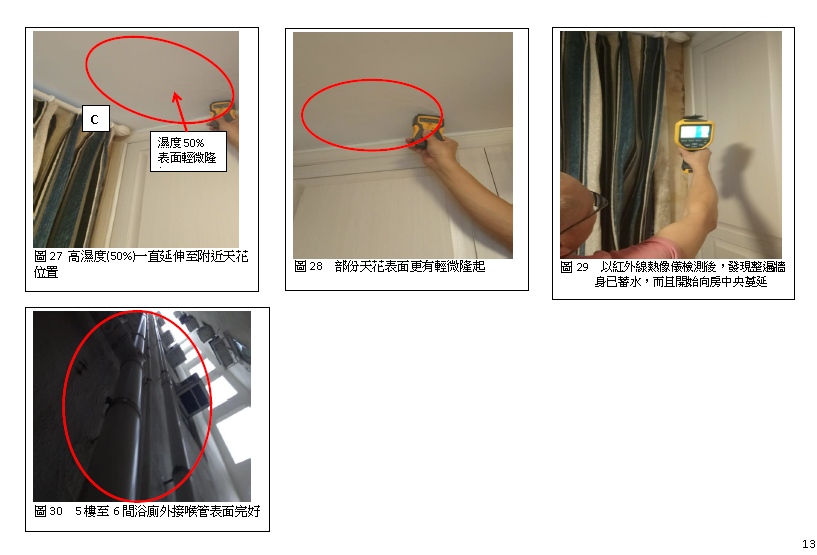
Thermal cameras measure temperature distribution across ceilings, walls and floors. Wet and dry areas often differ in temperature, helping locate potential dampness without damaging finishes.
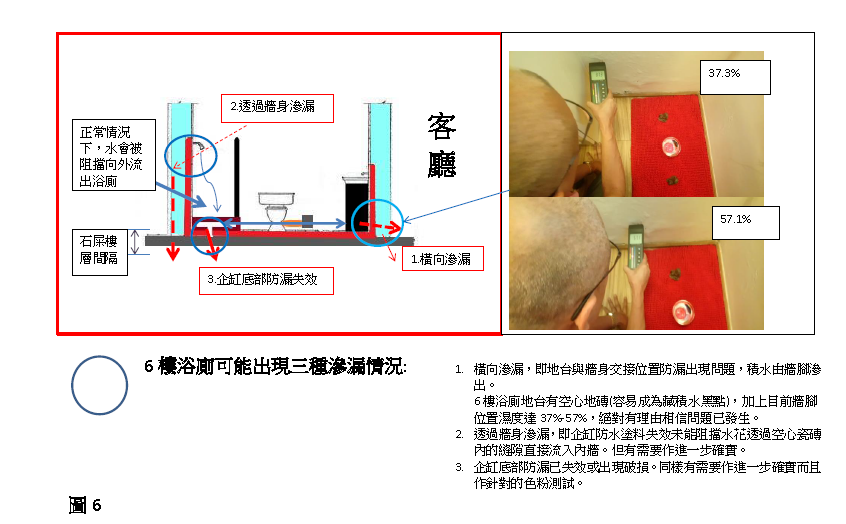
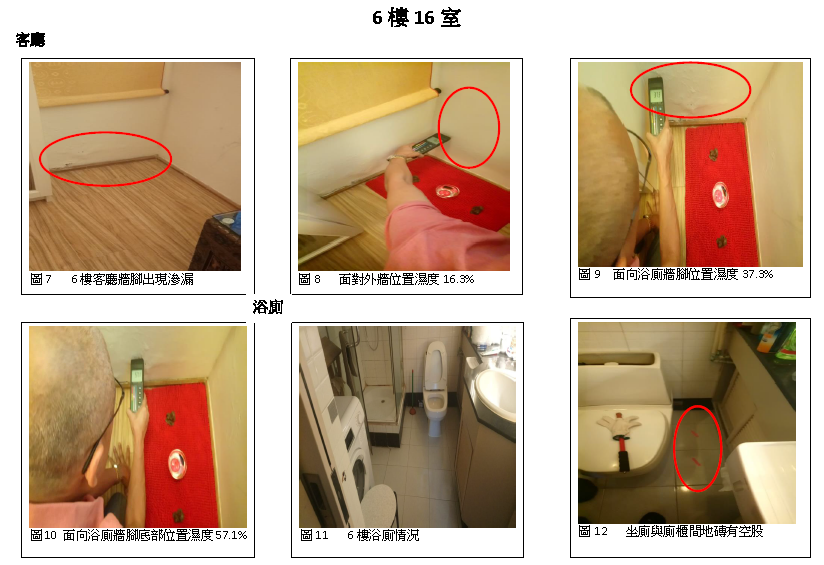
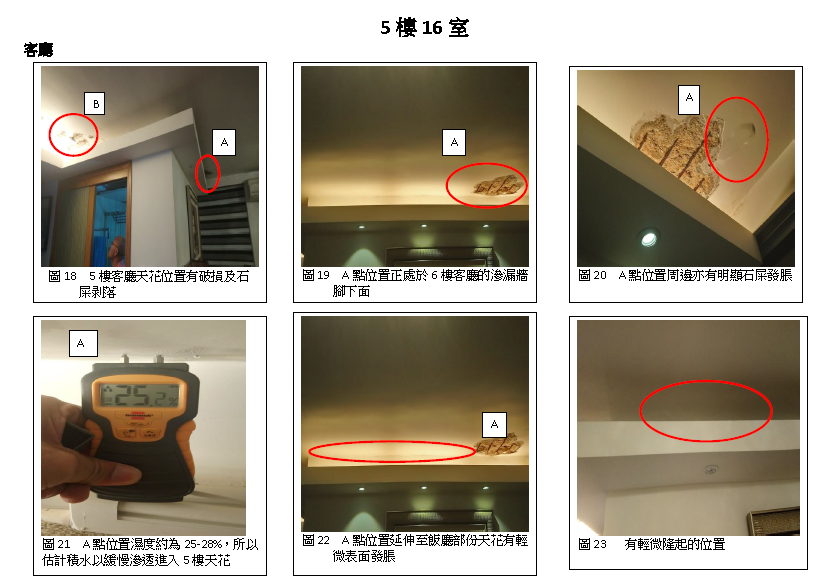
Moisture meters measure several points around the affected area to establish moisture distribution and changes, corroborating infrared results.
Microwaves can penetrate finishes and assess moisture below the surface, helping map water within walls or floors without opening them up.
Fluorescent dye is introduced at the suspected source and the affected area examined under ultraviolet light. Fluorescence indicates a leakage pathway between the locations.
Seawater is used for flushing in many Hong Kong districts. Salt measurements in seepage samples help determine whether flushing water is involved and narrow down the source.
Testing samples for urea helps assess whether leakage originates from sewage or drainage systems.
Water is ponded on a suspected floor area and moisture below monitored over time to test bathroom, kitchen, balcony or roof waterproofing.
Water is sprayed onto external walls, windows or wall surfaces to simulate rain while checking for indoor leakage, assessing weatherproofing performance.
One of the instrumental methods selected according to site needs, helping assess conditions beneath finishes alongside other test results.
Investigators examine the location, extent and surroundings and compare seepage timing with rainfall records to assess whether rain is involved.
Leakage report
Following testing, we prepare a report covering:
Reports may be signed by recognised registered professionals for court proceedings or engineering meetings. For our team and qualifications, seeOrganisation and team qualifications。
A professional estimate of leakage damage, including repairs to ceilings, walls, floors and finishes, supporting the amount claimed from a responsible party or insurer.
For legal proceedings, we can provide expert witness services and reports based on the findings. The court determines a report's role in each case; legal advice is recommended.
Previous leakage reports can be found onSample leakage reports and photographspage.
Case studies
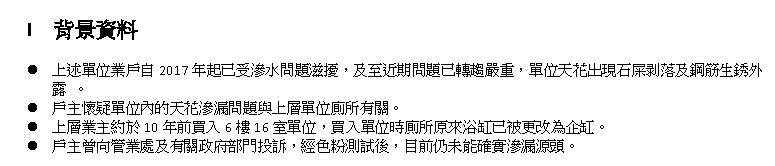
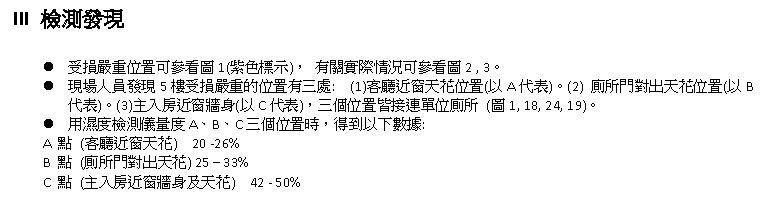
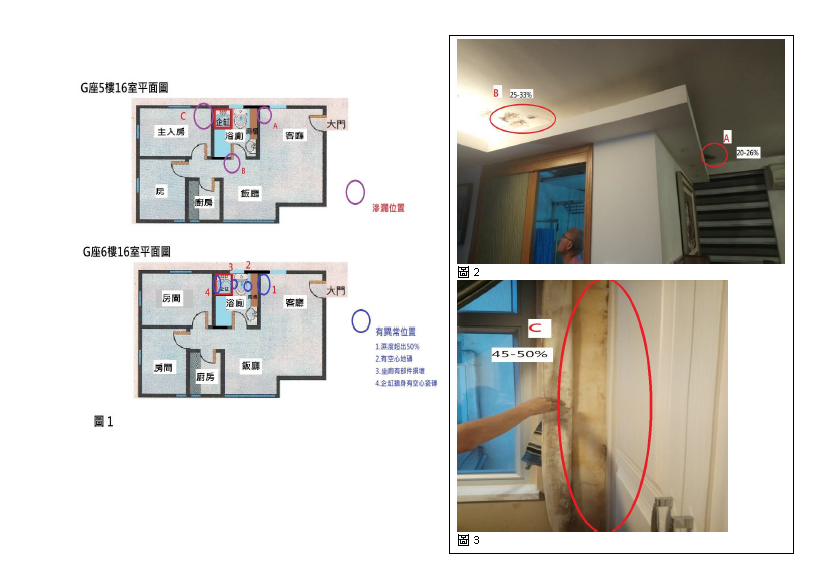
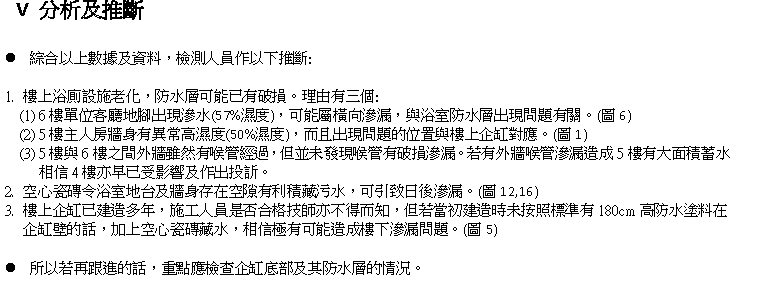
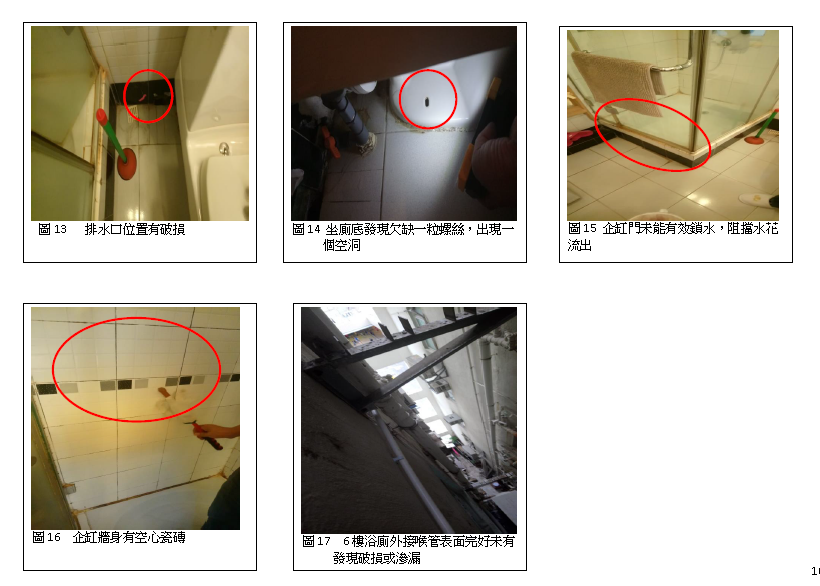
These photographs show previous cases. Our investigators visit the site and select suitable equipment, includingInfrared thermal camerasandMoisture metersto identify the source. Details are photographed during testing as evidence for the report.
Integrated service
After locating the source, we can provide repairs following the report's recommendations, including:
Repainting or replastering the damp surface does not solve the cause. Repair the source first, allow materials to dry, then restore finishes. For other works, seeServices。
Government and independent investigations
The Joint Office is staffed by FEHD and Buildings Department personnel and investigates free of charge. Stage 1 establishes seepage with moisture readings of at least 35%; Stage 2 includes drain dye tests and monitoring; Stage 3 involves consultant-led testing such as ponding and wall spraying. New procedures from 16 July 2026 add infrared imaging at Stage 1.
The Joint Office addresses seepage constituting a sanitary nuisance. Cases below 35% moisture are not investigated, and compensation between owners is outside its remit.
Private investigations are paid services without a moisture threshold. Instruments and tests are tailored to the case, and reports include repair recommendations, cost estimates and loss assessment for repairs, negotiations or claims. Government and private investigations can proceed together.
For steps to address upstairs seepage and government penalties, seeUpstairs seepage and Joint Office FAQs; official information is available on theJoint Office for Investigation of Water Seepage Complaints website.
Fees and booking
Fees depend on the affected area, tests required and whether reports, loss assessments or expert witness services are needed. Quotations follow a review of the case.
Frequently asked questions
It establishes the location and extent of seepage and traces causes and sources. We investigate ceilings, external and internal walls, floors, roofs, burst pipes, sewage backflow and related flooding problems.
No. It measures surface temperature distribution without opening walls, ceilings or floors. Investigators corroborate the findings with moisture meters and other methods.
First, survey and test the site to locate the source. Second, photograph findings and prepare a report with repair recommendations, cost estimates and loss assessment. Third, repair the source according to the recommendations.
It includes site photographs, repair recommendations, cost estimates and related loss assessment, and can be signed by recognised registered professionals for court proceedings and engineering meetings. The court determines its role in a case; consult a solicitor as well.
Yes. Investigators can use infrared scans, moisture distribution and water sample tests in the affected flat, assess potential sources by elimination and prepare a report for negotiation or further action.
Both can proceed together. The free government investigation addresses sanitary nuisance at moisture readings of at least 35%, not compensation. Consider private testing for minor or intermittent seepage, faster source identification, or a report for negotiation and claims.
Fees depend on the leakage area, tests and whether a report, loss assessment or expert witness is needed. Please call 92703423 or 68186286 for a quotation after discussing the case.
Yes. We provide an integrated repair service based on the report, including waterproofing for roofs, bathrooms, window sills, walls and kitchens.
Early action is best for leaks. Call us today
92703423
Man Kee provides leak detection, infrared testing, source investigations, reports, loss assessments and expert witness services for residential and commercial properties in Hong Kong. Please call 92703423 / 68186286, or visit theContact uspage to leave your details. Our office is at Room A4, 17/F, Block A, Chungking Mansions, 40 Nathan Road, Tsim Sha Tsui, Kowloon.